Loading image...
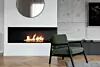

What is an ethanol burner?
An ethanol burner is the self-contained combustion unit that holds and ignites bioethanol fuel inside a fire feature. The burner contains the fuel tank, the controlled opening where combustion happens, and the regulator that adjusts flame height. It does not need a gas line, a chimney, or a flue, which is why ethanol burners enable vent-free operation in spaces where a traditional fireplace would be impossible.
Where most readers (and most competing articles) get the language tangled is the line between the burner and the fireplace. A fireplace is the finished installation: surround, hearth, glass, the lot. The burner is what sits inside it doing the work. The same XL900 burner can live behind a glass-fronted built-in, drop into a fire table on a terrace, or anchor a freestanding sculptural piece in a hotel lobby. The fire is the same fire. The architecture around it changes.
How bioethanol combustion works
Bioethanol is a liquid alcohol distilled from fermented plant sugars, the same chemistry that produces drinking alcohol, refined for fuel use. When it burns cleanly, the reaction is simple. Ethanol combines with oxygen and the products are heat, water vapour, and a small amount of carbon dioxide. Nothing else. No smoke, no soot, no ash, no particulates that need to be vented up a chimney.
That is what “clean burning” means at the chemical level. It is not a marketing claim, it is a description of the balanced reaction. Wood combustion produces tar, creosote, and particulate matter that has to leave the building through a flue. Bioethanol does not, because the byproducts are the same gases your lungs already exhale. Adequate room ventilation matters, which we will come back to, but no structural extraction system is required.

