Loading image...
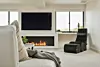

Built-in Fireplaces
Transform your living space
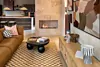
Free from traditional installation restrictions such as plumbing, roof work, and gas or electricity connections, our built-in solutions provide unlimited design options for builders, architects, interior designers and homeowners. With the uniquely versatile EcoSmart Fire, you have the building block to help bring your vision to life.
Built-In Ranges


Loading image...


The perfect fit
The streamlined design of the products synchronises effortlessly within award-winning architectural projects.
Loading image...

Loading image...
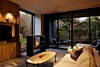
 © UFU KYU-KARUIZAWA Restful Forest
 No connections
Light up outdoor spaces with a soft, alluring glow - easily and efficiently, without cumbersome connections.
Carbon neutral
Models burn readily available, environmentally friendly e-NRG bioethanol, which is a carbon neutral fuel source.
Loading image...


True zero clearance
Self-contained, zero clearance construction provides unlimited installation freedom and flexibility for builders, architects, interior designers, landscapers and homeowners.
Loading image...

Loading image...


Loading image...

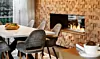
 © Southern Ocean Lodge. Photography by George Apostolidis
 Durability
Made from a combination of long-lasting materials, including stainless steel and durable toughened glass, EcoSmart Fire Pit Kits are built for all weather conditions.
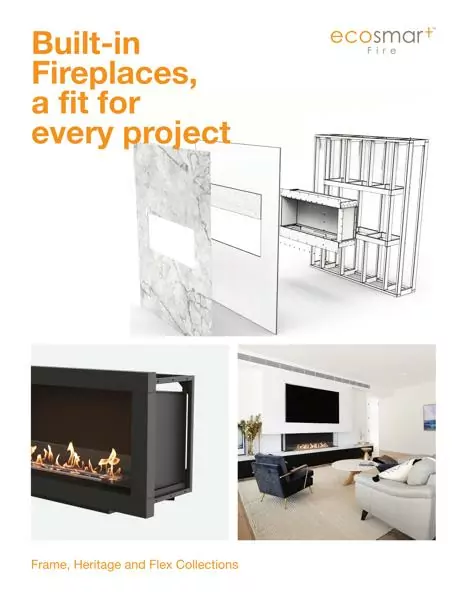
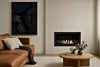

Loading image...
No flue, no chimney, no vent
No vent or flue required, which stops heat from escaping. Increase heat output by closing the dampener or sealing off the flue with a metal plate.
Loading image...
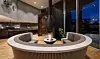

Maximum quality
EcoSmart is the product of choice by many world-renowned architects and designers.
Loading image...


Easy to keep clean
Bioethanol Fireplaces don't leave any carbon residue, so they are incredibly easy to keep clean. Just wipe them down with a damp cloth every now and then.
Loading image...
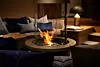
 © FUFU KYU-KARUIZAWA Restful Forest
 Tested world wide
Our collection has been thoroughly tested against a number of global standards. LP/NG burners are listed by UL to ANSI Z21.97-2017 and CSA 2.41-2017.
Styled by Our Clients
Loading image...

Loading image...

Loading image...

Loading image...

Loading image...

Loading image...

Loading image...

Loading image...

Loading image...

Related Collections
Learn More
FAQ's
How much does it cost to install a built-in fireplace?
Built-in bioethanol fireplace installation costs significantly less than traditional gas or wood-burning options because no gas lines, chimney construction, or electrical connections are required. You eliminate multiple expensive trade requirements entirely: no gas fitter, no chimney specialist, no structural engineering. Installation costs vary primarily by finishing materials and local labour rates.
EcoSmart Fire bioethanol fireplaces can save up to 70% compared to gas fireplace installation costs. The majority of cost goes into framing, wall preparation, and finishing materials, not utility connections. Self-contained bioethanol fireplace designs install in under an hour with minimal home disruption, since the burner requires no permanent utility hookups. A single specialist contractor completes the job, reducing labour complexity and cost.
Your main cost variables are:
- Finishing materials (cabinetry, cladding, surrounds)
- Wall location and cavity preparation
- Local labour rates
- Bespoke design elements
All EcoSmart Fire bioethanol fireplaces carry UL certification (USA/international) and comply with safety standards across markets, backed by rigorous engineering and independent safety validation. The clean-burning technology eliminates soot and residue, avoiding long-term maintenance costs that traditional fireplaces require.
For a site-specific quote, contact a local installer or your EcoSmart Fire dealer.
What size built-in fireplace should I choose for my room?
Built-in fireplace sizing depends on both visual proportion and room volume. Think of it as a design focal point that needs adequate scale to feel intentional in the space.
A useful starting point is the proportion rule: your fireplace width should be roughly one-third to one-half of the wall width it occupies, and the firebox depth should feel proportional to the room's volume rather than floor area alone. EcoSmart Fire bioethanol built-ins span from compact 488 mm [19 in] models suited to cosy spaces, to 4,140 mm [163 in] installations for generous living areas. Room volume matters more than square footage. A burner outputting 2 kW suits rooms of around 40 m³ [1,413 ft³] minimum, while a 4 kW burner needs approximately 70 m³ [2,473 ft³]. The wider your chosen width, the larger the burner capacity and room volume required.
Start by measuring your wall and estimating your room's height; if the space feels proportionally balanced when a fireplace occupies one-third of that wall, you're in the right zone. From there, match the burner capacity to your room's cubic volume, and your retailer can guide the exact pairing.
What is the difference between a built-in fireplace and a fireplace insert?
A built-in fireplace is installed directly into wall studs during construction or renovation, embedding the unit flush with the wall cavity. The surrounding finish, including marble, timber, concrete, or custom millwork, is fully customisable and can be updated later without damaging the underlying structure. Fireplace inserts are pre-assembled stand-alone units designed to slide into an existing firebox opening or dedicated cutout, ready for finishing in under an hour.
Both use bioethanol burner technology with zero-clearance construction, eliminating the need for flue, chimney, or gas lines. The choice depends on your project type. Built-ins suit new construction and major renovations where the full wall cavity is available and you want unlimited design flexibility. Architects and designers favour this format for its scope to become a true architectural anchor, the defining frame for an entire interior moment.
Inserts work best for retrofitting into an existing opening: beneath flat-screen TVs, within cabinetry, kitchen islands, or recessed walls. They're faster to install and ideal when you want a fire feature without structural modifications.
Both formats have been trusted by architects and designers worldwide for over two decades, with more than 150,000 installations across residential and commercial projects.
What are the venting requirements for ethanol built-in fireplaces?
EcoSmart Fire built-in bioethanol fireplaces do not require a chimney, flue, or dedicated ducting. They rely on adequate room air circulation per UL safety standards. The appliance must remain open to room air at all times, drawing oxygen directly from your space rather than via external vents.
Room ventilation is determined by your burner's heat output. The minimum requirement is 5.7 cubic metres [200 cubic feet] of air space per 1,000 BTU/hour of maximum burner capacity. For example, an XL900 burner (running at maximum) requires approximately 110 cubic metres [3,884 cubic feet] of room volume.
Avoid installing in bathrooms or small enclosed spaces. Do not pack insulation or materials into air gaps around the appliance, as this restricts essential airflow. Beyond these practical precautions, EcoSmart Fire built-in models install without the complexity of gas connections, structural venting, or chimney engineering.
What frame materials and finishes are available for built-in fireplaces?
EcoSmart Fire built-in fireplaces prioritise safety features through carefully selected frame materials: mild steel with zinc sealing and high-temperature powder coat in black, paired with a toughened low-iron glass fire screen and grade 304 stainless steel burner (available in standard or optional black ceramic finish).
The real design flexibility lies in the surrounding finishes. Because the appliance is zero-clearance self-contained, you can specify marble, concrete, custom millwork, or any non-combustible material (stone, tile, brick, glass, or steel) without structural modification. Combustible materials like wood, paper, or plastics must not be in direct contact with the appliance; this separation ensures both safety compliance and thermal performance.
For interior designers and architects, this means the fireplace becomes a neutral component while your surrounding materials carry the aesthetic expression and maintain safety requirements automatically. You control the full material palette, which is why the product works across traditional and contemporary contexts without aesthetic compromise.
Can I install a built-in fireplace in an existing home?
Yes, bioethanol fireplaces install readily in existing homes without major structural modifications. The fireplace is non-load-bearing and sits within a simple timber frame that you build to fit your opening, with no need for chimneys, gas lines, or electrical work. This makes retrofit installation far simpler than traditional fireplaces or gas conversions.
The installation sequence is straightforward. You build your wall framework to the cut-out dimensions, slide the firebox in place, secure it via flange mounting holes, level it, then finish with your choice of materials. Most of the work is carpentry, and it completes in under an hour once framing is prepped. The firebox itself has a cavity depth of 365 mm [14.4 in], so you're not carving into walls or altering structure.
Key clearances to respect: 600 mm [23.6 in] minimum from the flame to fixed furniture, 2,000 mm [78.7 in] overhead clearance to movable items, and a 12.5 mm [0.5 in] air gap between the appliance and ground. These are simple to achieve in most existing layouts. Over 90% efficiency means genuine warmth alongside the ambience, making bioethanol fireplaces a practical choice for homes where traditional fireplace installation isn't feasible.
What does zero-clearance mean for built-in fireplaces?
Zero-clearance built-in fireplaces are self-contained fireboxes with integrated insulation that allow installation directly against combustible materials such as timber framing or finished surrounds. EcoSmart Fire engineers its built-in range as complete units that slot into standard wall studs, without a chimney, gas connection, or separate ventilation infrastructure. The insulated construction, built around a Grade 304 stainless steel burner and a zinc-sealed mild steel casing, meets UL 1370, EN 16647, and ACCC safety standards.
This construction gives architects and homeowners genuine design flexibility. Surrounds in marble, timber, concrete, or custom millwork can sit directly around the unit, subject to the minimum clearances set out in each model's installation documentation. Zero-clearance engineering releases a built-in from traditional proximity limits, opening up placements inside cabinetry, feature walls, and integrated architectural elements that conventional hearths cannot accommodate.
Can I mount a TV above a built-in fireplace?
Yes, you can mount a TV above an EcoSmart Fire built-in fireplace using one of three approved configurations: a non-combustible mantel or ledge between the flame and screen; a recessed niche positioned at least 300 mm [11.8 in] above the firebox opening; or a set-back wall arrangement with the same 300 mm [11.8 in] minimum clearance. For overhead installations, maintain 1,650 mm [65 in] clearance above the grate; fixed furniture should stay 600 mm [23.6 in] from the flame.
Bioethanol fireplaces produce significantly less ambient radiant heat than traditional gas or wood combustion. There is no rising column of hot flue gases to manage. This is precisely why TV mounting is achievable without aftermarket heat deflection systems. Before finalising your setup, check your specific TV's operating temperature range and mounting bracket load rating against the fireplace's thermal output to ensure full compatibility.
EcoSmart Fire's built-in fireplaces feature true zero-clearance design, engineered for precisely this kind of integration. Detailed clearance guidance is available in the product installation manual and dedicated TV installation flyer on ecosmartfire.com.
How efficient are built-in ethanol fireplaces compared to gas and electric?
Built-in ethanol fireplaces deliver better heat retention than gas fireplaces because their closed combustion system keeps every BTU in the room, whereas gas models lose roughly 30% of heat through vents. However, ethanol fireplaces are designed as supplemental heating, not primary heat sources, with outputs ranging from 5,800 to 48,600 BTU/h depending on burner size.
An average ethanol installation heats up to 120 m² [1,292 ft²], running for 8–13 hours per fuel load at an operating cost around USD $1.88–$4.38 per hour. This makes ethanol cost-competitive with gas for supplemental warmth, and significantly more efficient than electric fireplaces, which typically deliver 5,000–10,000 BTU/h (1,500–3,000 W).
The efficiency trade-off: while ethanol captures all combustion heat, it does require adequate air exchange in your space to maintain indoor air quality. Gas fireplaces are simpler to operate but sacrifice heat efficiency to venting requirements. Electric options produce less heat overall but require no ventilation and suit spaces where open flame isn't practical. Choose based on your primary goal (supplemental warmth, ambience, or both) and your room's ventilation capacity.
How much heat does a built-in ethanol fireplace produce?
Built-in ethanol fireplaces produce between 5,800 and 20,433 BTU/h (1.7–6 kW) depending on burner size, delivering meaningful supplemental warmth via radiant and convective heat.
EcoSmart Fire sizes each burner to deliver genuine warmth, not just visual flame. The heat is generated through radiant transfer (the warmth radiating from the visible flame) and convective circulation. These figures represent manufacturer-tested outputs; actual room heating depends on ceiling height, insulation, and whether the space is fully enclosed. Because there is no flue, all generated heat stays in the room, making ethanol fireplaces more efficient distributors than vented alternatives.
Compact round burners deliver around 8,500 BTU/h (2 kW) for spaces around 20 m² [215 ft²], while larger round burners reach 20,400 BTU/h (6 kW) for areas up to 60 m² [646 ft²]. Linear burners span 11,400–15,300 BTU/h (3–4 kW) for 40–65 m² rooms.
Bioethanol fireplaces work best as ambient or supplemental heating, complementing rather than replacing your main heating system.